
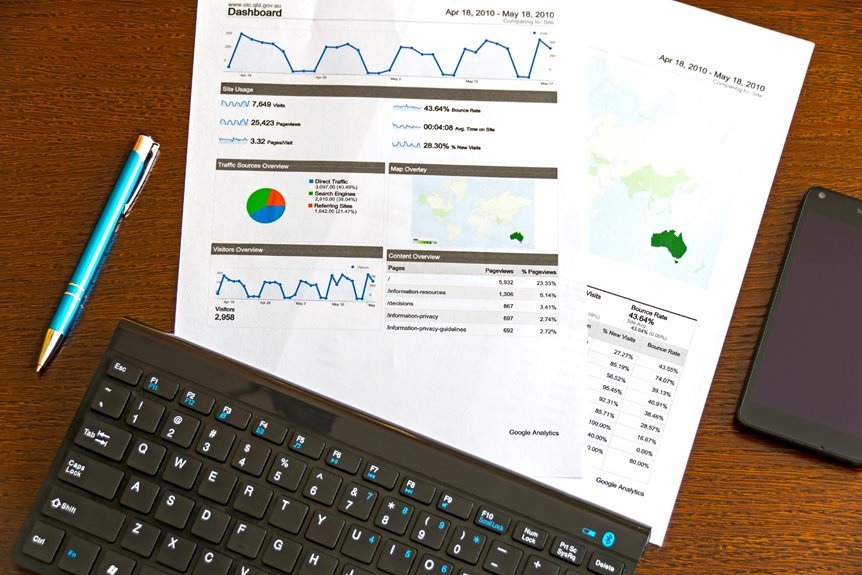
A Business Performance Dashboard serves as a vital tool for organizations aiming to optimize their operations. Key metrics such as revenue growth and customer satisfaction can significantly influence strategic decisions. The integration of specific data points—959772249, 18003147195, 644306464, 8009059146, 120426517, and 1204890648—highlights the importance of tailored analytics. This raises questions about the effectiveness of current dashboard designs and their role in fostering agility and innovation. What insights could emerge from a refined approach?
Understanding Business Performance Dashboards
Although various tools exist for tracking business metrics, understanding business performance dashboards is crucial for effective decision-making.
These dashboards facilitate data visualization by presenting complex information in an accessible format. Effective dashboard design emphasizes clarity and relevance, enabling users to quickly interpret data trends and insights.
Key Metrics to Include in Your Dashboard
Key metrics play a pivotal role in the effectiveness of a business performance dashboard, serving as essential indicators of organizational health and progress.
Important key performance indicators (KPIs) may include revenue growth, customer satisfaction, and operational efficiency.
Steps to Implement an Effective Dashboard
Implementing an effective business performance dashboard requires a systematic approach that encompasses several critical steps.
First, organizations must focus on dashboard design, ensuring clarity and relevance in data presentation.
Next, fostering user engagement is essential, as stakeholders must connect with the dashboard’s content.
Lastly, continuous feedback loops should be established to refine and optimize the dashboard, enhancing its overall effectiveness for decision-making.
Leveraging Insights for Strategic Growth
Harnessing data-driven insights can significantly propel strategic growth within organizations.
By utilizing data visualization techniques, companies can clearly interpret performance analytics, revealing trends and opportunities. This clarity enables informed decision-making that aligns with organizational goals.
Moreover, leveraging these insights fosters a culture of agility, encouraging innovation and responsiveness to market changes, ultimately driving sustainable growth and enhancing competitive advantage.
Conclusion
In conclusion, a well-structured Business Performance Dashboard is indispensable for organizations aiming to harness data-driven insights. While some may argue that the integration of numerous data points could lead to information overload, a thoughtfully designed dashboard can filter and prioritize these metrics, ensuring clarity and relevance. This strategic approach empowers stakeholders to swiftly interpret trends and opportunities, ultimately fostering a proactive culture that supports sustainable growth and informed decision-making in a competitive landscape.